
Bistec en Cazuela (Cuban Braised Steak in Tomato Sauce)
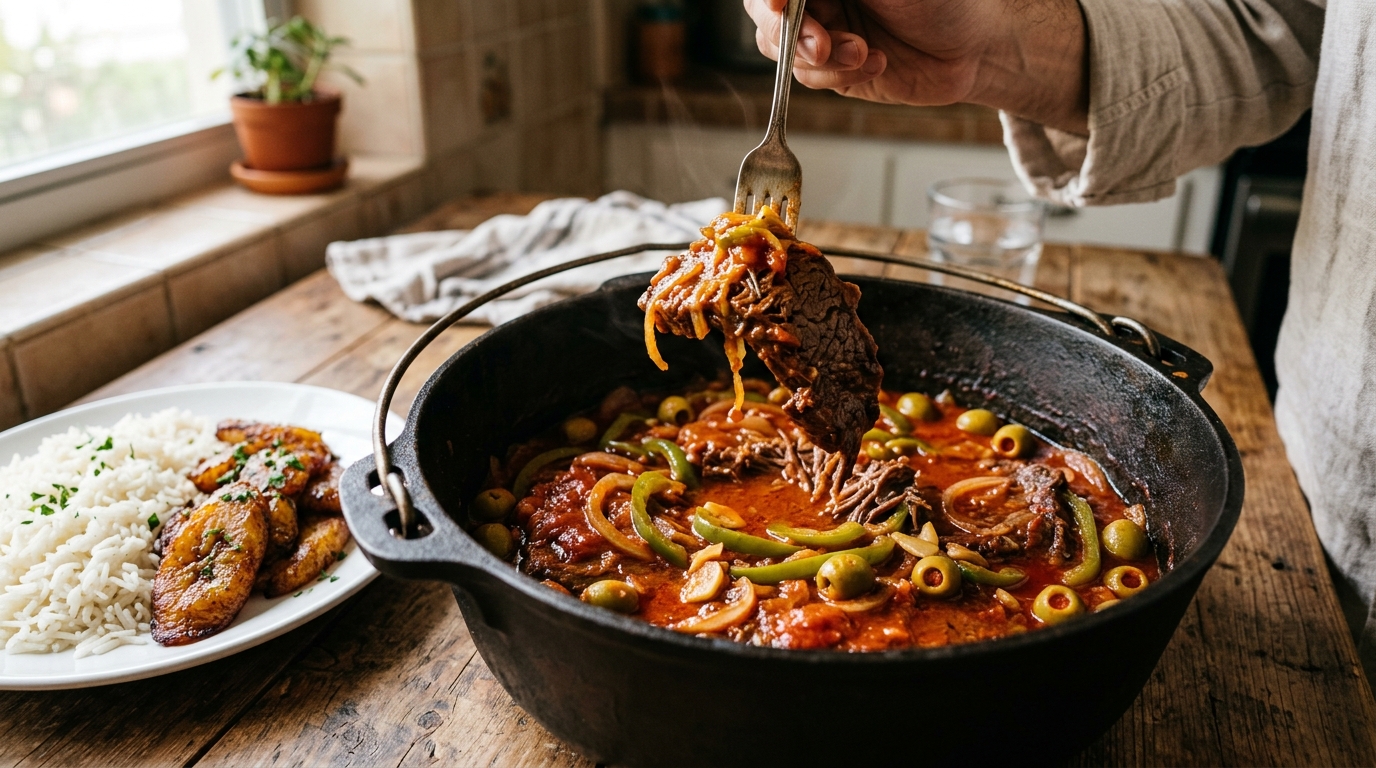
Bistec en cazuela — literally "steak in the pot" — is the dish that perfumes a Cuban house from mid-morning on a Sunday: thin steaks seared hard, then left to braise in a tomato sauce with onion, green pepper, garlic, vino seco and a handful of olives until the meat falls apart and the sauce is thick enough to coat the rice. It's the kind of recipe that turns a $6 package of thin-cut round steak into the best thing on the table, which is exactly why every Cuban grandmother in Miami, Union City and Tampa has her own version.
This is mine, written for a US kitchen: the cut to ask for at Publix or a Hispanic market, what vino seco is and where it lives in the store, why the long simmer is not optional, and the questions I get from people who grew up eating this and are making it for the first time. Everything else on the site in English is on the recipes in English page.
What is bistec en cazuela?
It's a Cuban braise: beef steaks browned quickly for color, then finished covered, over low heat, in a tomato-based sofrito sauce until tender. The tomato, dry wine and olives are the Spanish fingerprint on Cuban cooking — the same trio that shows up in ropa vieja and picadillo — and they're what separate this from a plain stewed steak. It's cousin to bistec de palomilla (the same thin steak, but pan-fried fast with onions and lime, no sauce) and to ropa vieja (shredded flank in a similar sauce). Bistec en cazuela sits in between: whole steaks, long braise, lots of sauce.
The right cut (and why thin and cheap is correct)
You want a thin, lean, inexpensive cut — this is a braise, and the long cook is what makes it tender. In Cuban markets it's sold as palomilla or bistec de res; at a US supermarket ask for thin-cut top round or bottom round, about ½ inch thick — often labeled "thin sliced round steak," "sandwich steak" or "milanesa cut" (Publix, Sedano's, Walmart and any Latin butcher have it). Sirloin tip steaks work too. Don't use ribeye or strip: the fat that makes them great on a grill turns greasy in a long braise, and you'd be paying three times as much for a worse result.
If your steaks are thicker than ½ inch, pound them lightly between sheets of plastic wrap — it speeds up the braise and helps the sauce get into the meat.
Vino seco and the other Cuban pantry items
- Vino seco is Cuban dry cooking wine — salty, sherry-like, sold in tall bottles (Goya, Edmundo, La Fe) in the Hispanic aisle of most US supermarkets and at every Latin market. It's the authentic flavor. Substitute: any dry white wine (pinot grigio, sauvignon blanc) plus an extra pinch of salt. Don't use sweet wine or "cooking sherry."
- Tomato sauce means the plain canned kind (Goya or Hunt's 8-oz cans), not pasta sauce.
- Olives: pimiento-stuffed green olives (Goya manzanilla) are traditional and add a briny note that cuts the richness. My family adds a few black olives too. Skip them if you hate olives; the dish survives.
- Cumin — a little; it's the background note in most Cuban braises.
More recipes like this
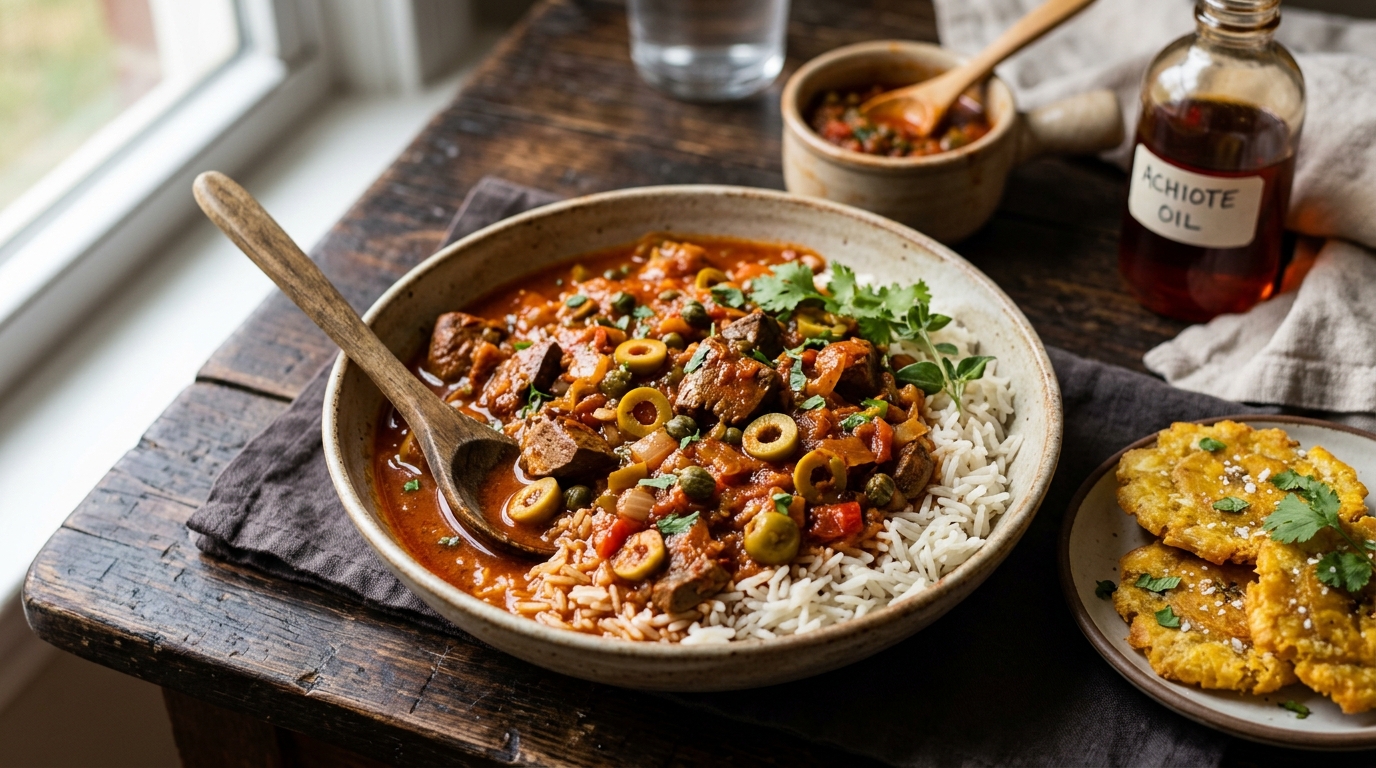
Bistec en Cazuela (Cuban Braised Steak in Tomato Sauce)
Cuban bistec en cazuela: thin steaks seared, then braised low and slow in tomato sauce with onion, green pepper, garlic, dry cooking wine and olives until fork-tender. One pot, cheap cuts, Sunday-dinner flavor.
Ingredients
Instructions
- Season and sear: pat the steaks dry and season both sides with the salt, pepper and cumin. Heat the olive oil in a Dutch oven or caldero over medium-high until shimmering. Sear the steaks in batches, 2–3 minutes per side, until deeply browned; don't crowd the pot. Transfer to a plate.
- Build the sofrito: lower the heat to medium, add the onion and green pepper to the same pot and cook 5–6 minutes, scraping up the browned bits, until soft. Add the garlic and cook 1 minute more.
- Add the sauce: stir in the tomato sauce, vino seco, water (or broth), oregano and bay leaf. Bring to a simmer.
- Braise: return the steaks and any juices to the pot, tucking them into the sauce, and scatter the olives on top. Cover, reduce the heat to low and simmer gently 60–90 minutes, turning the steaks once, until fork-tender and the sauce has thickened. (If using potatoes, add them for the last 25 minutes.)
- Finish: discard the bay leaf, taste the sauce and adjust salt and pepper — it concentrates as it cooks. If the sauce is thin, uncover and simmer 5 minutes more.
- Serve hot over white rice, with black beans and sweet fried plantains if you want the full Cuban plate.
Other recipes to try
Tips
Tips from my kitchen
- Dry the steaks and sear them hard. The first time I rushed this step the sauce tasted flat — the browned crust is where most of the flavor comes from. Pat the meat dry, get the oil shimmering over medium-high, and leave the steaks alone 2–3 minutes per side until deeply browned. Work in batches; a crowded pan steams.
- Scrape up the browned bits when the onions go in — that fond dissolves into the sauce and is the difference between homemade and restaurant.
- Low heat, lid on, time. Thin round steak goes through a tough stage around 30 minutes and comes out the other side tender at 60–90. If it's still chewy, it needs more time, not more heat. Don't boil it.
- Season at the end. The sauce reduces and concentrates, and vino seco is salty on its own. Taste and adjust salt in the last 10 minutes, not at the start.
- Potatoes in the pot: add 2 cups of peeled, cubed Yukon Gold or russet for the last 25 minutes. They soak up the sauce and turn it into a one-pot dinner.
- Use a heavy pot. A Dutch oven or a caldero (the cast-aluminum Cuban pot, cheap at any Latin market) holds gentle heat better than a thin skillet.
- It's better the next day. Make it Saturday, reheat it Sunday. The sauce thickens and the meat relaxes.
Variations
- Instant Pot / pressure cooker: sear using the sauté function, build the sauce, then 25 minutes on high pressure with natural release. The sauce will be thinner — reduce it on sauté for 5–10 minutes after.
- Slow cooker: sear on the stove first (don't skip it), then 6 hours on low with the sauce. Add the olives for the last hour.
- With raisins: a tablespoon stirred in with the olives, picadillo-style, gives the sauce a sweet-salty balance some families swear by.
- Red pepper instead of green, or half and half — sweeter, a little more Puerto Rican in spirit.
- Sazón: a packet of Goya sazón con culantro y achiote in the sauce is how a lot of Cuban-American households make it now. Reduce the added salt if you use it.
Nutrition facts
Per serving
makes 4| Calories | 390 | |
| Protein | 38g | |
| Carbohydrates | 11g | |
| Fat | 19g | |
| Fiber | 3g | |
| Sodium | 780mg |
Keywords: bistec en cazuela recipe, bistec en cazuela, cuban steak in tomato sauce, cuban braised steak, bistec en cazuela cubano, cuban beef recipes, steak in a pot
Did you make this recipe?Rate it and tell me how it turned out in the comments.
What to serve with bistec en cazuela
Always white rice — that's what the sauce is for. The full Cuban plate adds black beans (or congrí, rice and beans cooked together), sweet fried plantains (maduros), and a simple avocado-and-onion salad with oil and vinegar. For a weeknight, rice and a green salad is plenty. And a piece of Cuban bread to wipe the plate, if you can get it.
Frequently asked questions
What cut of beef is bistec en cazuela made with?
Thin (about ½-inch) top round or bottom round — sold as thin-sliced round steak, sandwich steak, milanesa cut, or palomilla at Latin markets. Sirloin tip works. Avoid marbled steakhouse cuts; they turn greasy in a braise.
What is vino seco, and what can I substitute?
Cuban dry cooking wine — a salty, sherry-like white wine sold by Goya, Edmundo and La Fe in the Hispanic aisle. Substitute dry white wine plus a pinch of salt, or, in a pinch, ¼ cup dry sherry plus ¼ cup water.
Why is my bistec en cazuela tough?
It hasn't cooked long enough, or the heat was too high. Round steak tightens up in the first half hour and then relaxes — give it a full hour to an hour and a half at a bare simmer with the lid on. If it's tough at 60 minutes, cook 20 more.
What's the difference between bistec en cazuela, bistec de palomilla and ropa vieja?
Same thin steak in the first two: palomilla is pan-fried fast with onions and lime, no sauce; en cazuela is braised slowly in tomato sauce. Ropa vieja uses flank steak, braised and then shredded, in a similar sauce.
Can I make it ahead or freeze it?
Yes to both — it improves overnight in the fridge and freezes well for 3 months in its sauce. Reheat gently, covered, with a splash of water.
Can I make it without wine?
Use ½ cup beef broth plus 1 tablespoon of white or apple cider vinegar. You'll lose a little depth but it's still very good.
One last thing
This is the Cuban dish I make when someone tells me they "don't really like stews." It converts people. Leave a rating below and tell me what cut your butcher gave you — every store seems to call it something different.
0 comments