
Puerto Rican Flan (Flan de Queso)
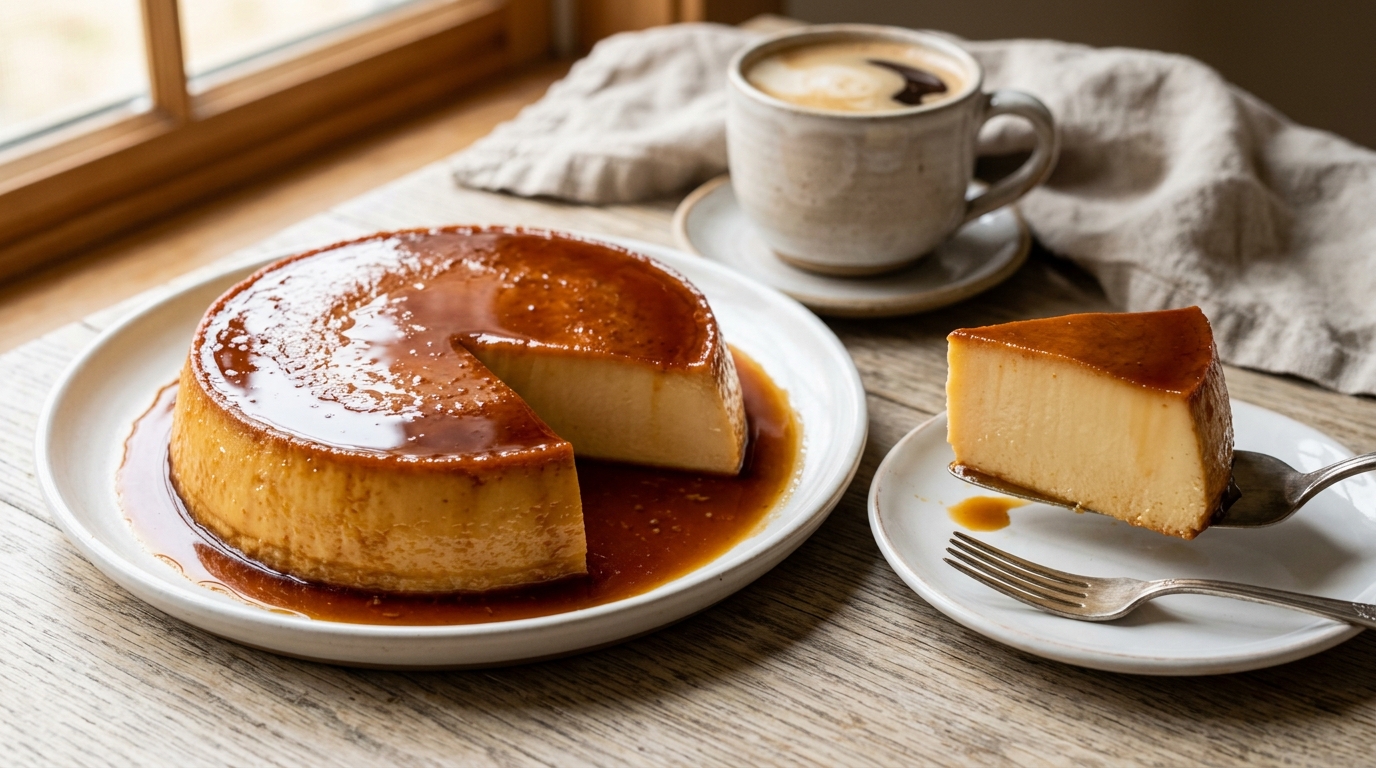
Ask a Puerto Rican for "flan" and this is what they mean: flan de queso, the cream-cheese flan — denser and silkier than the Spanish custard it descends from, a little tangy, sitting in a pool of dark amber caramel. It's on the table at every birthday, Thanksgiving and Christmas Eve from Bayamón to Orlando, it's the dessert that travels to the office potluck in its own pan, and it's one of the easiest impressive things you can make: five ingredients, a blender, a water bath and a night in the fridge.
I learned mine the way most people do — standing next to someone's mother — and the recipe below is that one, written for a US kitchen with the cans and the cream cheese you'll find at any supermarket, plus the handful of small things (room-temperature cheese, a gentle oven, patience at the unmolding) that separate a flawless flan from one with bubbles and a weeping top. For the rest of the site in English, see the recipes in English page.
What makes Puerto Rican flan different?
Cream cheese. Classic Spanish and Mexican flan is eggs, milk and sugar — light, wobbly, almost a panna cotta. The Puerto Rican version adds a block of cream cheese and uses sweetened condensed and evaporated milk instead of fresh, which gives a denser, richer custard that slices cleanly, closer to a very light cheesecake, with a faint tang that keeps it from being cloying. It's the same family as Cuban flan de leche (also condensed/evaporated, no cheese) and Mexican chocoflan; the cheese is the Puerto Rican signature, which is why you'll also hear it called flan de queso crema or just flan boricua.
Ingredients and US notes
- Cream cheese: one 8-oz block of Philadelphia (or store brand) — full-fat, at room temperature. Cold cream cheese is the number-one cause of lumps. Not whipped, not the tub.
- Sweetened condensed milk (14-oz can) and evaporated milk (12-oz can) — Eagle Brand, Carnation, Goya, store brand; all fine.
- Eggs: 4 large, room temperature. Five eggs makes a firmer, more sliceable flan; four is silkier. I use four.
- Sugar for the caramel — plain white granulated. Nothing else.
- Vanilla — a teaspoon. Some families add a splash of rum or a little lime zest.
- The pan: a 9-inch round cake pan or the classic aluminum flanera with a lid (under $15 at any Latin market or online). A deep pie dish works. Glass is fine but takes about 15 minutes longer.
The caramel, without fear
Dry caramel scares people; wet caramel doesn't. Put the sugar and a splash of water in a small light-colored saucepan, set it over medium heat and don't stir — swirl the pan once it starts to color. It goes clear → pale gold → amber in about 8–10 minutes. Pull it the moment it's the color of iced tea; it keeps darkening off the heat, and burnt caramel is bitter. Pour it straight into the pan and tilt to coat the bottom. It will crack and harden — that's correct; it melts back into sauce in the oven.
More recipes like this
Puerto Rican Flan (Flan de Queso)
Puerto Rican flan de queso: the dense, silky cream-cheese flan under a pool of amber caramel that shows up at every Boricua party. Five ingredients, a blender and a water bath — and the tricks that keep it smooth, not eggy or bubbly.
Ingredients
Instructions
- Make the caramel: combine the sugar and water in a small light-colored saucepan over medium heat. Don't stir — swirl the pan once it starts to color — and cook 8–10 minutes until it's a deep amber, the color of iced tea. Immediately pour it into a 9-inch round cake pan or flanera and tilt to coat the bottom. Set aside; it will harden.
- Heat the oven to 325°F and put a kettle of water on. Set the caramel pan inside a larger roasting pan.
- Blend the custard: blend the cream cheese alone until smooth, then add the condensed milk, evaporated milk, eggs, vanilla and salt and blend 30 seconds, just until uniform. Let the mixture rest 10 minutes and skim off the foam.
- Strain and fill: pour the custard through a fine sieve over the caramel. Cover the pan loosely with foil.
- Water bath: pour hot (not boiling) water into the roasting pan until it comes halfway up the flan pan. Bake 60–75 minutes, until the edges are set and the center jiggles like Jell-O when nudged. (Glass pans take about 15 minutes longer.)
- Cool and chill: lift the flan out of the water, remove the foil and cool to room temperature, then refrigerate at least 4 hours — overnight is best.
- Unmold: run a thin knife around the edge, set a rimmed serving plate over the pan, and flip in one motion. Wait a minute for the caramel to run down, lift the pan, and serve cold in wedges with the caramel spooned over.
Other recipes to try
Tips
Tips from my kitchen
- Everything at room temperature. Cream cheese and eggs. Take them out an hour ahead, or microwave the cream cheese 15 seconds. This alone prevents most lumpy flans.
- Blend, then strain. The blender gets the cream cheese perfectly smooth, but it also whips in air. Let the mixture sit 10 minutes, skim the foam, and pour it through a fine sieve into the pan. That's how you get a glassy top with no pinholes.
- Hot water bath, foil on top. Set the flan pan in a roasting pan, cover the flan with foil, then pour hot (not boiling) water halfway up the sides. The water keeps the custard gentle; the foil keeps the top from browning or forming a skin.
- 325°F, not 350°F. A lower oven means fewer bubbles and no curdled edges. It takes 60–75 minutes: done when the edges are set and the center still jiggles like Jell-O when you nudge the pan. It firms up as it chills.
- Chill overnight. Four hours minimum; overnight is better for both texture and the caramel, which needs time to liquefy under the custard.
- Unmold with a hot knife and a plate with a lip. Run a thin knife around the edge, set a rimmed plate on top, hold them together and flip in one confident motion. Let it sit a minute so the caramel runs down. If it resists, dip the pan bottom in hot water for 30 seconds and try again.
- Don't over-bake. A flan that's firm in the center in the oven will be rubbery and weepy the next day. Trust the jiggle.
Variations
- Flan de coco: replace the evaporated milk with a can of coconut milk and add ½ cup sweetened shredded coconut. The other great Puerto Rican flan.
- Flan de guayaba: melt ½ cup of guava paste into the evaporated milk first. Pink, floral, very Boricua.
- Flan de vainilla (no cheese): leave the cream cheese out for a lighter, Cuban-style flan de leche; add one more egg.
- Individual flans: ramekins or 4-oz canning jars, caramel in each, 35–40 minutes in the water bath.
- Instant Pot: 6-inch pan on the trivet with 1½ cups water, 25 minutes high pressure, natural release. Surprisingly good.
- A splash of rum (Don Q or Bacardí, a tablespoon) in the custard is how a lot of families make it for the holidays.
Nutrition facts
Per serving
makes 10| Calories | 360 | |
| Protein | 9g | |
| Carbohydrates | 47g | |
| Fat | 15g | |
| Fiber | 0g | |
| Sodium | 190mg |
Keywords: puerto rican flan recipe, puerto rican flan, flan de queso, cream cheese flan, flan de queso recipe, boricua flan, how to make puerto rican flan
Did you make this recipe?Rate it and tell me how it turned out in the comments.
How to serve Puerto Rican flan
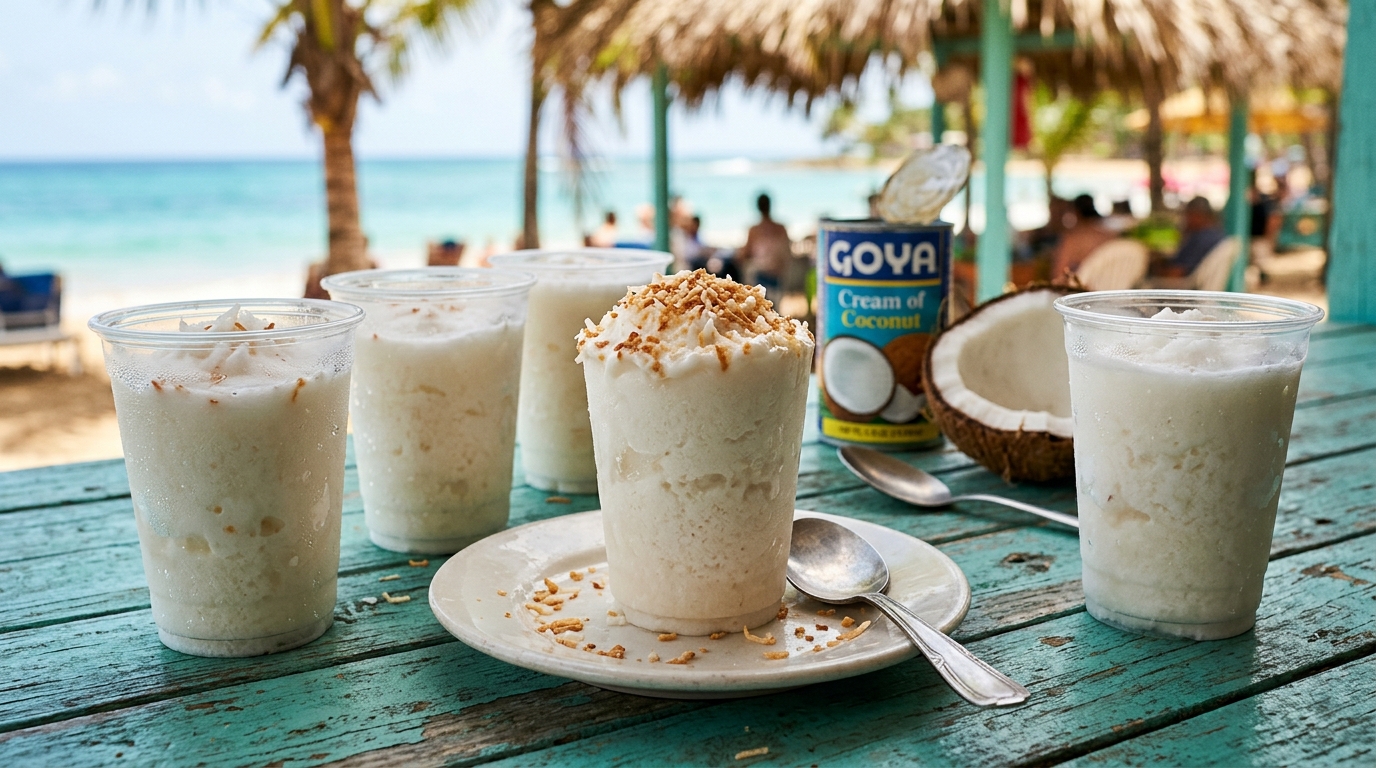
Cold, in wedges, with the caramel spooned over and whatever runs onto the plate. It needs nothing, though a few slices of fresh mango or a cup of strong café con leche alongside are traditional. At a party it sits next to tembleque, arroz con dulce and, if someone has been industrious, a tray of limber de coco in the freezer. It travels perfectly in its pan — unmold at the party, not before.
Frequently asked questions
What is Puerto Rican flan made of?
Cream cheese, sweetened condensed milk, evaporated milk, eggs and vanilla, baked in a water bath over a layer of caramel. The cream cheese is what makes it Puerto Rican — it's also called flan de queso.
Why does my flan have bubbles or holes?
Too much air from the blender, or too hot an oven. Let the blended mixture rest and skim the foam, strain it, cover with foil, and bake at 325°F in a water bath. A boiling water bath also causes bubbles — use hot tap water.
Why is my flan watery or weeping?
Over-baked. Pull it when the center still jiggles; it sets fully as it chills. Also: the caramel is supposed to become a thin sauce — that liquid is not a problem.
Can I make flan without a water bath?
You can, but the edges will overcook before the center sets. A water bath is five extra minutes of effort and the difference between silky and rubbery.
How far ahead can I make it?
Up to 3 days, covered, in the fridge, in its pan. Unmold the day you serve it. Leftovers keep 4–5 days unmolded and covered.
Can I freeze flan?
Not well — the custard separates when it thaws. It keeps so long in the fridge that you won't need to.
One last thing
This is the recipe people ask me to bring. Make it the night before, flip it at the table, and watch the caramel run down the sides — that moment is the whole reason flan exists. If you make it, leave a rating below and tell me: four eggs or five?
0 comments