
Honduran Baleadas (Thick Flour Tortillas with Beans, Crema and Cheese)

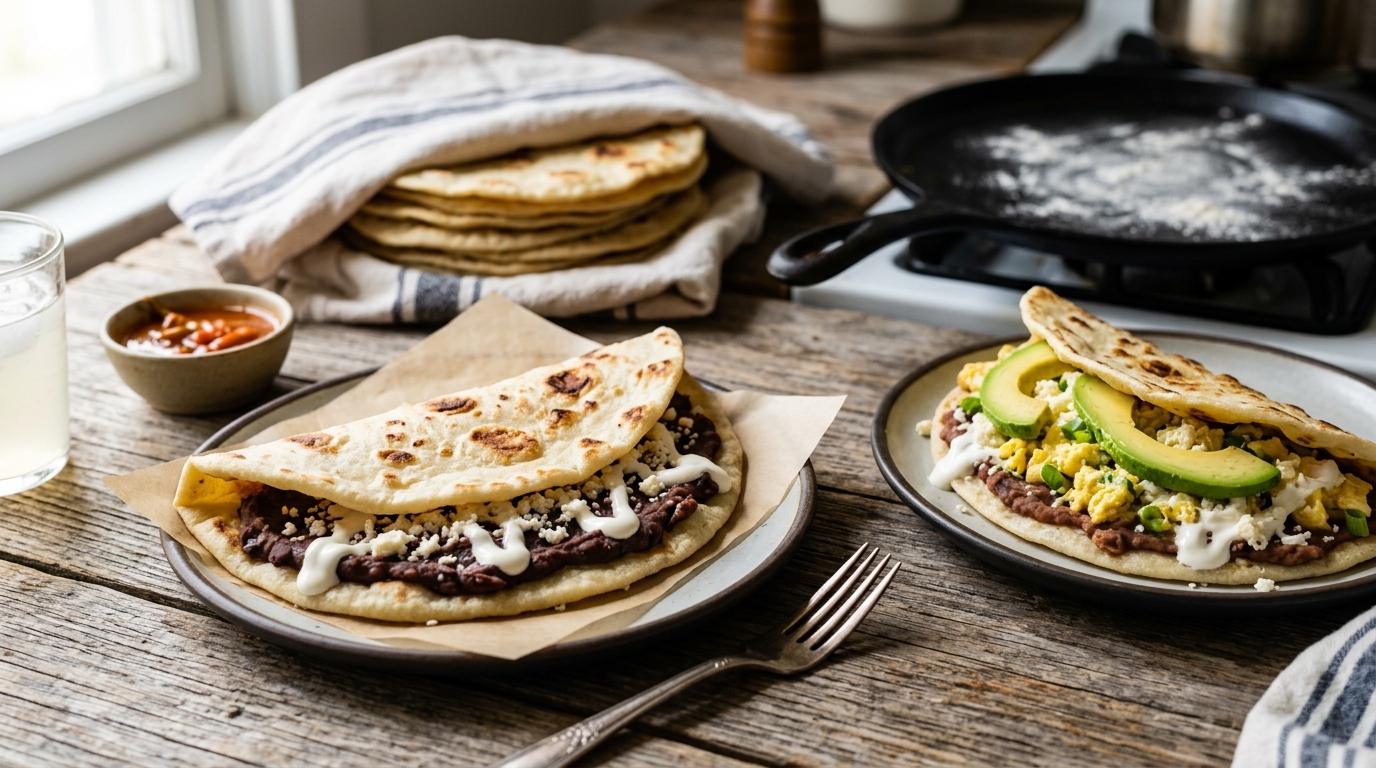
If Honduras has a national dish, it's the baleada: a thick, soft, slightly sweet flour tortilla made fresh on a griddle, folded over a smear of refried red beans, a line of sour cream and a shower of salty dry cheese. That's the sencilla, the plain one, and it costs about a dollar from a street cart in San Pedro Sula or La Ceiba at any hour. Add scrambled eggs, avocado and some meat and you have the especial — breakfast, lunch or a 2 a.m. snack, depending.
The filling is easy. The thing that makes a baleada a baleada — and the thing Honduran friends in Houston and Miami tell me they miss most — is the tortilla: thicker and fluffier than a Mexican flour tortilla, with a little fat and a little sugar in the dough, puffed and blistered on a dry comal. This recipe is mostly about getting that right, with the ingredients you'll find at any US supermarket. For everything else on the site in English, see the recipes in English page.
What is a baleada?
A folded flour tortilla with beans, crema and cheese, from Honduras's north coast. The name, the story goes, comes from a woman who sold them near a banana-company town and had been shot (baleada) — or from the filling being "shot" into the tortilla; nobody agrees, everyone repeats both. What's certain is that it's the country's everyday food: there's a baleada stand on every corner, Baleada Express chains in the cities, and a baleada place in every US neighborhood with Hondurans in it. It's eaten folded in half, held in a napkin, with your hands.
The three parts, US edition
- The tortilla: all-purpose flour, baking powder, a pinch of sugar, salt, vegetable shortening (Crisco) or lard, warm water. That's it. Shortening gives the classic soft, slightly flaky texture; lard is more traditional and tastes richer. Don't use a Mexican tortilla recipe — those are thinner and not sweet.
- The beans: Honduran refried beans are frijoles rojos — small red beans — cooked soft and fried with a little oil and onion into a thick, smooth paste. Canned is fine on a weeknight: Goya or Ducal frijoles rojos volteados (Hispanic aisle at Walmart, Publix, Fiesta), or any refried red beans; in a pinch, refried pintos. They should be thick enough to spread, not runny — cook a loose can down in a skillet.
- Crema and cheese: Honduran crema (Olanchito, Cacique crema hondureña) is thinner and tangier than sour cream — find it at any Latin market. Sour cream loosened with a spoon of milk is the substitute. The cheese is queso seco or queso duro, a salty crumbly dry cheese; cotija is the closest US stand-in, then crumbled queso fresco with a pinch of salt, then Parmesan.
More recipes like this
Honduran Baleadas (Thick Flour Tortillas with Beans, Crema and Cheese)
Honduran baleadas from scratch: the soft, puffy homemade flour tortilla, thick refried red beans, crema and crumbled dry cheese — plus the 'especial' with eggs and avocado. Honduras's national street food, US-kitchen edition.
Ingredients
Instructions
- Make the dough: whisk the flour, baking powder, sugar and salt. Rub in the shortening with your fingertips until the mixture looks like coarse sand. Add the warm water a little at a time and knead 5 minutes into a soft, smooth, slightly tacky dough. Divide into 6 balls, cover with a towel and rest 15 minutes.
- Roll: on a lightly floured surface, roll each ball into a 7–8 inch round about ⅛ inch thick — thicker than a store tortilla.
- Cook the tortillas: heat a dry cast-iron skillet or comal over medium-high. Cook each tortilla 1–2 minutes per side until it bubbles, puffs and gets golden-brown spots; press the big bubbles gently with a spatula. Stack the cooked tortillas under a towel to stay soft.
- Warm the fillings: heat the refried beans in a small skillet until thick and spreadable (cook down a loose can a few minutes). If making the especial, scramble the eggs and warm the meat.
- Assemble: on a hot tortilla, spread a generous spoonful of beans over one half, drizzle a line of crema and sprinkle with cheese. For an especial, add scrambled egg, avocado slices and meat.
- Fold in half and eat immediately, with hot sauce on the side.
Other recipes to try
Tips
Tips from my kitchen
- Rest the dough. 15 minutes minimum after kneading, covered. Unrested dough springs back when you roll it and cooks up tough; rested dough rolls out thin and puffs.
- Thicker than you think. Roll each ball to about 7–8 inches and ⅛ inch — noticeably thicker than a store tortilla. That's where the fluffy layer comes from.
- Hot, dry griddle — no oil. A cast-iron skillet or comal over medium-high. The tortilla should bubble within 30 seconds and get golden-brown freckles in 1–2 minutes per side. If it's pale after two minutes, the pan isn't hot enough; if it's burning, turn it down.
- Press the bubbles gently with a spatula so the tortilla cooks evenly, and keep the finished ones stacked under a towel so they steam and stay soft.
- Thick beans, thin crema. Beans should hold a line when you drag a spoon through them; crema should drizzle. Reversed, the baleada falls apart.
- Assemble hot and eat now. A baleada is a now food. The tortilla goes from the griddle to beans to hands in under a minute.
- Make the tortillas ahead if you must: cooked tortillas keep 2 days in a bag and reheat on a dry skillet in 30 seconds. Raw dough balls keep overnight in the fridge.
Variations (how Hondurans actually order them)
- Sencilla: beans, crema, cheese. The original, and the test of a good tortilla.
- Con huevo: sencilla plus scrambled egg — the breakfast standard.
- Especial / con todo: beans, crema, cheese, scrambled egg, avocado, and meat — usually carne molida (seasoned ground beef), pollo or chorizo. Some add fried plantain.
- Con chorizo: crumbled Honduran or Mexican chorizo, cooked crisp.
- Con mantequilla: in Honduras mantequilla on a baleada means crema, not butter — good to know when you order one.
- Whole-wheat or gluten-free: half whole-wheat flour works fine; a gluten-free flour blend with xanthan makes a decent tortilla that won't puff as much.
Nutrition facts
Per serving
makes 6| Calories | 420 | |
| Protein | 14g | |
| Carbohydrates | 50g | |
| Fat | 18g | |
| Fiber | 7g | |
| Sodium | 620mg |
Keywords: honduran baleadas recipe, baleadas recipe, baleadas hondureñas, honduran baleada, baleada tortilla recipe, honduran food, how to make baleadas
Did you make this recipe?Rate it and tell me how it turned out in the comments.
How to serve baleadas
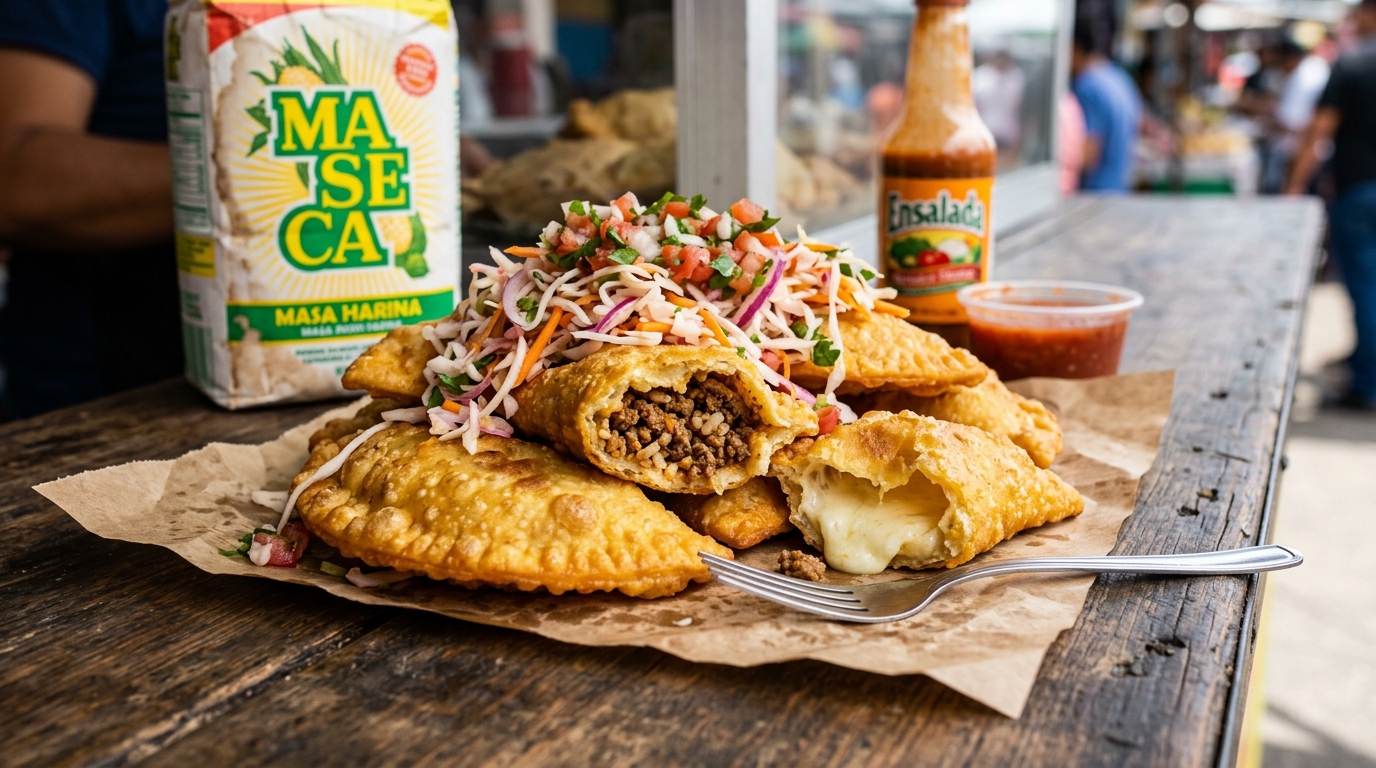
Folded, hot, in a napkin, with a bottle of hot sauce on the table and a cold horchata or coffee. Two sencillas is a light lunch; one especial is a meal. For a crowd, set out a stack of warm tortillas under a towel, the beans in a skillet on low, and bowls of crema, cheese, eggs, avocado and meat — everyone builds their own, which is exactly how it works at a Honduran table. If you're doing a Central American spread, a plate of Honduran pastelitos next to the baleadas covers both the soft and the crunchy.
Frequently asked questions
What is a baleada made of?
A thick homemade flour tortilla folded over refried red beans, crema (Honduran sour cream) and crumbled dry cheese. The especial adds scrambled eggs, avocado and meat.
What's the difference between a baleada tortilla and a Mexican flour tortilla?
The Honduran tortilla is thicker, softer and slightly sweet, with a little baking powder and shortening or lard in the dough, and it's cooked until it puffs and blisters. A Mexican flour tortilla is thinner, flatter and not sweet.
What beans go in baleadas?
Refried frijoles rojos — small red beans. Canned refried red beans (Goya, Ducal) are the weeknight shortcut; refried pintos work if that's what you have. They should be thick and spreadable.
What cheese do you use for baleadas?
Honduran queso seco or queso duro. In the US, cotija is closest; crumbled queso fresco with extra salt, or grated Parmesan, also work.
Why are my tortillas tough?
Dough that wasn't rested, or too much flour, or a griddle that wasn't hot enough (so they dried out before they puffed). Rest 15 minutes, keep the dough soft, and get the pan properly hot.
Can I make the tortillas ahead?
Yes — cooked tortillas keep 2 days in a zip-top bag and a month frozen; reheat 30 seconds a side on a dry skillet. Dough balls keep overnight in the fridge; let them come to room temperature before rolling.
One last thing
Once you've made the tortilla twice you'll stop measuring and start eyeballing, which is how every Honduran cook does it. Leave a rating below if you make them and tell me how you ordered yours — sencilla, con huevo or con todo.
0 comments