
Pollo en Crema (Guatemalan Chicken in Cream Sauce)
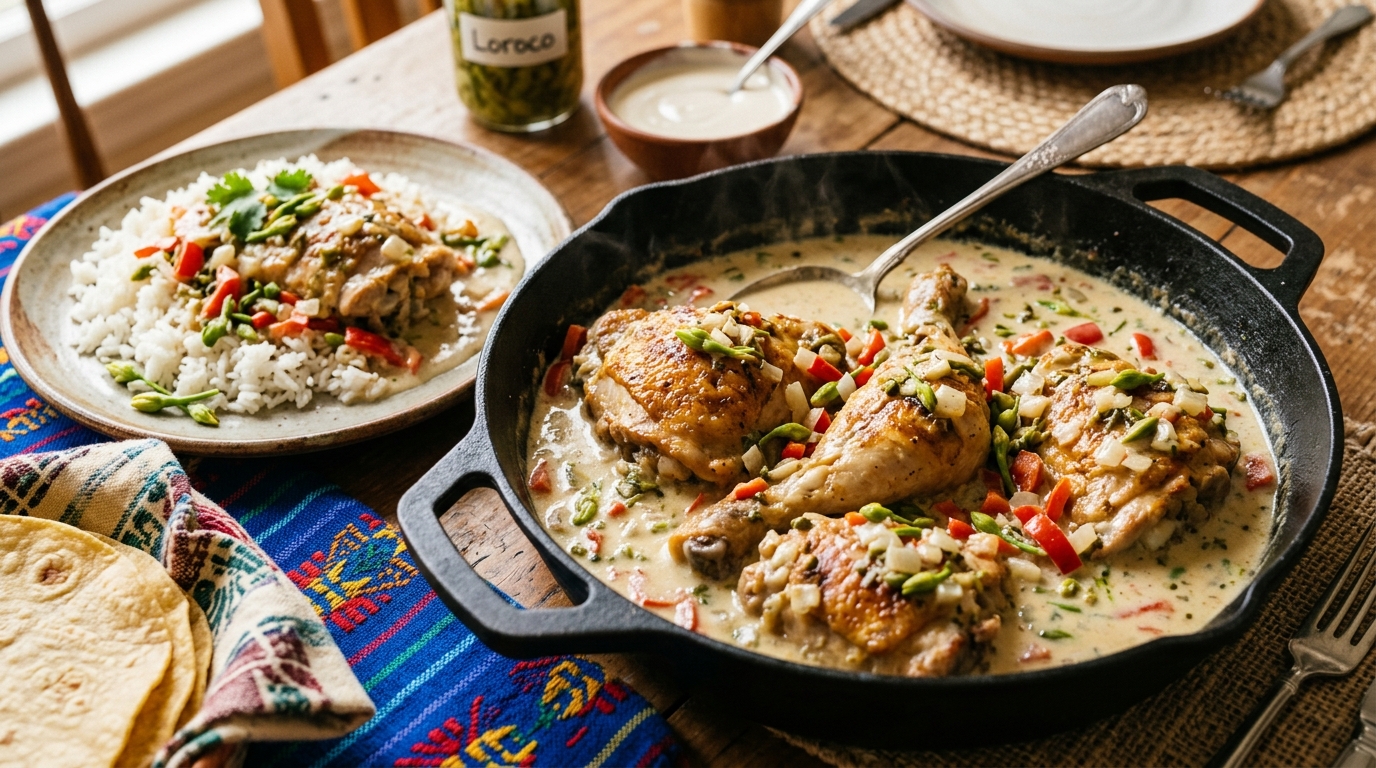
Pollo en crema is the dish Guatemalan kids ask for on their birthday and the one every Guatemalan restaurant in Los Angeles, Houston and Providence has on the lunch menu: pieces of chicken browned in a skillet, then simmered in a pale, silky sauce of crema, soft onion, sweet red pepper and garlic until the sauce thickens enough to cling to rice. It's mild, rich and comforting without being heavy — closer to a French fricassee than to anything spicy — and the whole thing happens in one pan in about 40 minutes.
This is the version I make in the US, with regular sour cream standing in for Guatemalan crema (it's closer than you'd think), the optional loroco that makes it taste like Guatemala, and the one rule that keeps the sauce from breaking. For the rest of the site in English, see the recipes in English page.
What is pollo en crema?
Literally "chicken in cream" — a Central American skillet braise, found in Guatemala and El Salvador, where chicken is cooked in a sauce built on crema (the thin, tangy cultured cream of the region) and a simple sofrito of onion, bell pepper and garlic, seasoned with a little cumin and oregano. The Guatemalan signature is loroco, the unopened flower bud of a Central American vine with a flavor somewhere between asparagus and artichoke; pollo en crema con loroco is the festive version, and it's the flavor that makes Guatemalans abroad go quiet. Without loroco it's still the everyday family dish, and it's what this recipe makes by default.
Ingredients, US edition
- Chicken: boneless thighs are the most forgiving and stay juicy; breasts are the classic and work if you don't overcook them. Bone-in pieces are traditional — add 15 minutes.
- Crema: Guatemalan or Salvadoran crema (Olanchito, Cacique crema centroamericana, El Mexicano) from any Latin market or the dairy case at Walmart, Food 4 Less, Fiesta. Full-fat sour cream thinned with a little milk is a very close substitute and what most Guatemalan-American kitchens use on a Tuesday. Don't use light sour cream — it breaks.
- Loroco: sold in jars in brine (Ducal, Goya, Del Tropic) in the Hispanic aisle, and frozen at Central American markets. Rinse and chop. ¼ cup transforms the dish; leave it out if you can't find it.
- Red bell pepper — sweet, not hot. Some families use green; red is prettier in the pale sauce.
- Consomé de pollo (Knorr chicken bouillon powder) is what a lot of Guatemalan cooks season with; a teaspoon in place of some of the salt is authentic.
More recipes like this
Pollo en Crema (Guatemalan Chicken in Cream Sauce)
Guatemalan pollo en crema: chicken browned and simmered in a silky sauce of crema, sautéed onion, red pepper and garlic, with optional loroco. One skillet, 40 minutes, made with sour cream from any US store.
Ingredients
Instructions
- Season and brown: pat the chicken dry and season with the salt and pepper. Heat the oil in a large skillet over medium-high and brown the chicken in batches, 3–4 minutes per side, until golden (it doesn't need to be cooked through). Transfer to a plate.
- Sofrito: lower the heat to medium, add the onion and red pepper to the same pan and cook 5 minutes until soft, scraping up the browned bits. Add the garlic, grated carrot, cumin and oregano and cook 2 minutes more.
- Deglaze: pour in the broth, stir up everything on the pan bottom, and simmer 3 minutes.
- Make the sauce: in a bowl, whisk the crema and milk with a ladle of the hot broth to temper it, then stir it into the pan. Reduce the heat to medium-low — the sauce must never boil from here on.
- Simmer: return the chicken and its juices to the pan, coat in the sauce, and simmer gently, uncovered, 15–20 minutes, stirring now and then, until the chicken is cooked through and the sauce coats a spoon. Stir in the loroco for the last 10 minutes if using.
- Finish: taste and adjust salt; thin with a splash of broth or milk if too thick, or simmer a few minutes more if too thin. Scatter the parsley over and serve hot over white rice with warm tortillas.
Other recipes to try
Tips
Tips from my kitchen
- Brown the chicken properly. Dry pieces, hot oil, don't move them for 3–4 minutes. The browned bits on the pan bottom are what give a cream sauce depth — without them it tastes like chicken in sour cream. Work in batches.
- Keep the sauce at a simmer, never a boil, once the crema goes in. High heat makes crema and sour cream curdle and separate. Medium-low from that point on; you should see lazy bubbles, not a rolling boil.
- Temper the crema. Stir a ladle of the hot broth into the crema in a bowl before adding it to the pan. It's a 20-second step that guarantees a smooth sauce.
- Loroco goes in late — the last 10 minutes — so it stays green and keeps its flavor.
- Thighs beat breasts for beginners. If you use breasts, cut them into 1½-inch pieces, and pull the pan off the heat the moment they're cooked through (about 165°F). Overcooked breast in cream sauce is the most common way this dish goes wrong.
- Adjust the thickness at the end. Too thin: simmer uncovered a few minutes. Too thick: a splash of broth or milk. The sauce should coat a spoon and pool, not run.
- Salt last. Bouillon and crema both carry salt; taste at the end.
Variations
- Pollo en crema con loroco: ¼ cup rinsed, chopped jarred loroco stirred in for the last 10 minutes. The Guatemalan celebration version — do this if you can find the jar.
- Con champiñones: 8 oz sliced mushrooms sautéed with the onion. Very common in Guatemala City.
- Con papas: 2 cups of peeled, cubed potato added with the broth — a one-pot dinner.
- Con chipilín or spinach: a handful of greens wilted in at the end; chipilín (frozen, at Central American markets) is the traditional one, spinach the easy one.
- Salvadoran style: same dish, usually with a little more tomato in the sofrito and often served with arroz and curtido.
- Lighter: half the crema replaced with evaporated milk, thickened with a teaspoon of cornstarch. Less rich, still good.
Nutrition facts
Per serving
makes 4| Calories | 450 | |
| Protein | 36g | |
| Carbohydrates | 9g | |
| Fat | 30g | |
| Fiber | 1g | |
| Sodium | 560mg |
Keywords: pollo en crema recipe, pollo en crema, guatemalan chicken in cream, pollo en crema guatemalteco, pollo en crema con loroco, guatemalan recipes, chicken in cream sauce
Did you make this recipe?Rate it and tell me how it turned out in the comments.
How to serve pollo en crema
Over white rice, with warm corn tortillas for dragging through the sauce — that's the plate at every comedor in Guatemala. Steamed or boiled potatoes, or a simple green salad, are the other common sides. Guatemalan-style rice with a few peas and carrots in it is the traditional partner; plain long-grain is fine. A cold horchata or rosa de Jamaica alongside.
Frequently asked questions
What is pollo en crema?
A Guatemalan (and Salvadoran) chicken dish: chicken browned and simmered in a creamy sauce of crema, onion, red pepper and garlic, often with loroco. Mild, rich, served over rice.
What is loroco and can I skip it?
The edible flower bud of a Central American vine, sold jarred in brine or frozen at Latin markets; it tastes like asparagus crossed with artichoke. It's the authentic Guatemalan touch, but the dish is excellent without it.
Can I use sour cream instead of crema?
Yes — full-fat sour cream thinned with 2–3 tablespoons of milk is the standard US substitute and very close. Heavy cream works too, with a squeeze of lime for tang. Don't use low-fat sour cream; it curdles.
Why did my cream sauce curdle?
It boiled. Once the crema is in, keep the heat at medium-low and the sauce at a bare simmer. Tempering the crema with a ladle of hot broth first also prevents it.
Breasts or thighs?
Thighs are juicier and more forgiving; breasts are traditional and lighter. If using breasts, cut them into pieces and don't overcook — pull them at 165°F.
Can I make it ahead?
Yes. It keeps 3 days in the fridge; reheat gently, covered, over low heat with a splash of milk — don't boil. It doesn't freeze well (the sauce separates).
One last thing
This is the recipe I make for people who think Central American food is all fried and spicy — it's the opposite, and it changes their minds in one plate. Leave a rating below if you make it and tell me whether you found loroco near you; I'm keeping a map.
0 comments