
Papa Majada (Puerto Rican Mashed Potatoes)
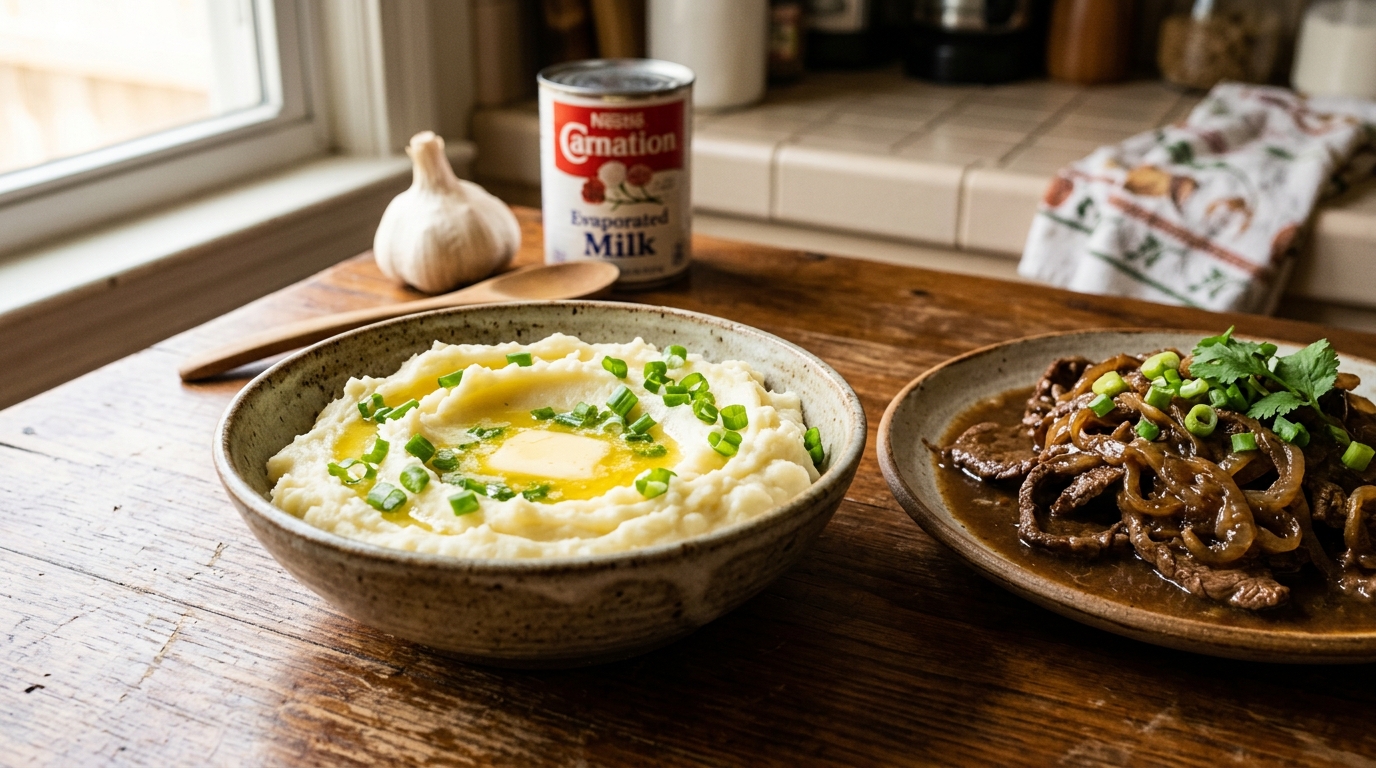
Ask for papa majada at a Puerto Rican lunch counter and you get a scoop of mashed potatoes so smooth and garlicky you forget they're the side dish. On the island they sit next to bistec encebollado soaking up the onion gravy, under a piece of chuleta frita, or — at Thanksgiving, which Puerto Ricans celebrate hard — in a mountain next to the pavochón. "Puerto Rican mashed potatoes" is the phrase people use when they're trying to describe what makes them different from the American kind, and the answer is simple: garlic boiled with the potatoes, evaporated milk instead of cream, and a spoonful of cream cheese for body.
Here's how I make them, with the potato that works, the mashing mistake that turns them to glue, and the toppings my family argues about. For the rest of the site in English, see the recipes in English page.
What is papa majada?
Majar means to mash or pound (it's the same verb as in mofongo), so papa majada is just "mashed potato" — but in Puerto Rico it means a specific thing: fluffy, very smooth mashed potatoes seasoned with garlic and enriched with butter and milk, often leche evaporada because that's what's in the cabinet. It's a weekday side, a fonda staple, and the filling for rellenos de papa (the fried stuffed potato balls). It's also the thing that makes a plate of carne guisada feel complete. Colombians and Venezuelans make a similar papa majada; the Puerto Rican one leans harder on garlic.
Ingredients, US edition
- Russets (Idaho) for the fluffiest, most absorbent mash — this is the potato for papa majada. Yukon Golds make a denser, buttery-yellow version that some families prefer; both are right, red or waxy potatoes are wrong (gummy).
- Garlic — a whole head's worth, peeled and boiled with the potatoes so it goes sweet and mashes in. Raw garlic is too sharp here.
- Evaporated milk (Carnation, Goya, store brand) is the Puerto Rican move — richer than milk, lighter than cream. Warm it. Heavy cream or whole milk work too.
- Cream cheese — 4 oz, room temperature. Not traditional everywhere, but it's how half the island makes them now and it's what gives the restaurant texture.
- Butter — real, plenty. Some cooks add a spoon of mayonnaise instead of cream cheese; it's the same idea.
- Adobo: a pinch of Goya adobo in place of some of the salt is the Boricua seasoning shortcut.
More recipes like this
Papa Majada (Puerto Rican Mashed Potatoes)
Puerto Rican papa majada: the garlicky, ultra-creamy mashed potatoes that go under bistec encebollado and next to pollo guisado — russets, garlic boiled with the potatoes, butter, evaporated milk and a spoon of cream cheese. The side every Boricua table has.
Ingredients
Instructions
- Boil: put the potatoes and garlic in a large pot, cover with cold water by an inch, add the tablespoon of salt and bring to a boil. Cook 20–25 minutes until a knife slides in with no resistance.
- Dry: drain well, return the potatoes and garlic to the pot over low heat and stir 2 minutes until the surface looks chalky and dry.
- Mash: pass the hot potatoes and garlic through a ricer, or mash by hand with a potato masher, until smooth. Do not use a blender, food processor or mixer.
- Enrich: with the pot over very low heat, fold in the softened butter until melted, then the cream cheese in pieces until it disappears. Add the warm evaporated milk a splash at a time, stirring gently, until the potatoes are as creamy as you like.
- Season: stir in the pepper and adobo, taste, and add salt generously — potatoes need more than you think.
- Serve hot in a warm bowl with a well of melted butter in the center and the scallions scattered over. (For the gratin version, spread in a baking dish, top with shredded cheddar and bake at 400°F for 10–15 minutes.)
Other recipes to try
Tips
Tips from my kitchen
- Start the potatoes in cold salted water with the garlic, and bring them up together. Dropped into boiling water, the outsides overcook before the centers are done.
- Dry them out. After draining, put the pot back over low heat for 2 minutes and stir until the potatoes look chalky. Wet potatoes make watery mash no amount of butter fixes.
- Ricer or masher, never a blender or mixer. Beating potatoes overworks the starch and turns them into paste. A ricer gives the smoothest papa majada; a hand masher gives a homier texture. Both are fine; the food processor is not.
- Warm the milk and soften the butter and cream cheese. Cold dairy cools the potatoes and seizes into lumps. Hot potatoes + warm dairy = smooth.
- Butter first, then cream cheese, then milk a little at a time. Stop adding milk when they're as loose as you like; they thicken as they sit.
- Salt more than you think. Potatoes drink salt. Taste at the end and adjust — under-salted is the most common flaw.
- Make-ahead: keep them warm up to 2 hours in a covered bowl over a pot of barely simmering water, or reheat gently with a splash of milk. Leftovers become rellenos de papa or potato pancakes.
Variations
- Papa majada gratinada: spread in a baking dish, top with shredded cheddar or Monterey Jack, and bake at 400°F for 10–15 minutes until golden. The party version.
- Loaded, Boricua style: crumbled fried bacon, chopped scallions and a spoon of sour cream on top.
- With sofrito: stir 2 tablespoons of sofrito into the butter as it melts — green-flecked and very island.
- Lighter: skip the cream cheese and use whole milk; still good, less rich.
- For rellenos de papa: make them stiffer (less milk, an egg yolk mixed in) and let them cool completely before shaping around the picadillo.
- Yautía or malanga mash: swap half the potatoes for yautía (malanga) from a Latin market — earthier and very traditional in the mountains.
Nutrition facts
Per serving
makes 6| Calories | 330 | |
| Protein | 6g | |
| Carbohydrates | 42g | |
| Fat | 16g | |
| Fiber | 3g | |
| Sodium | 420mg |
Keywords: puerto rican mashed potatoes, papa majada, papa majada recipe, puerto rican mashed potatoes recipe, garlic mashed potatoes puerto rican, papas majadas, boricua mashed potatoes
Did you make this recipe?Rate it and tell me how it turned out in the comments.
How to serve papa majada
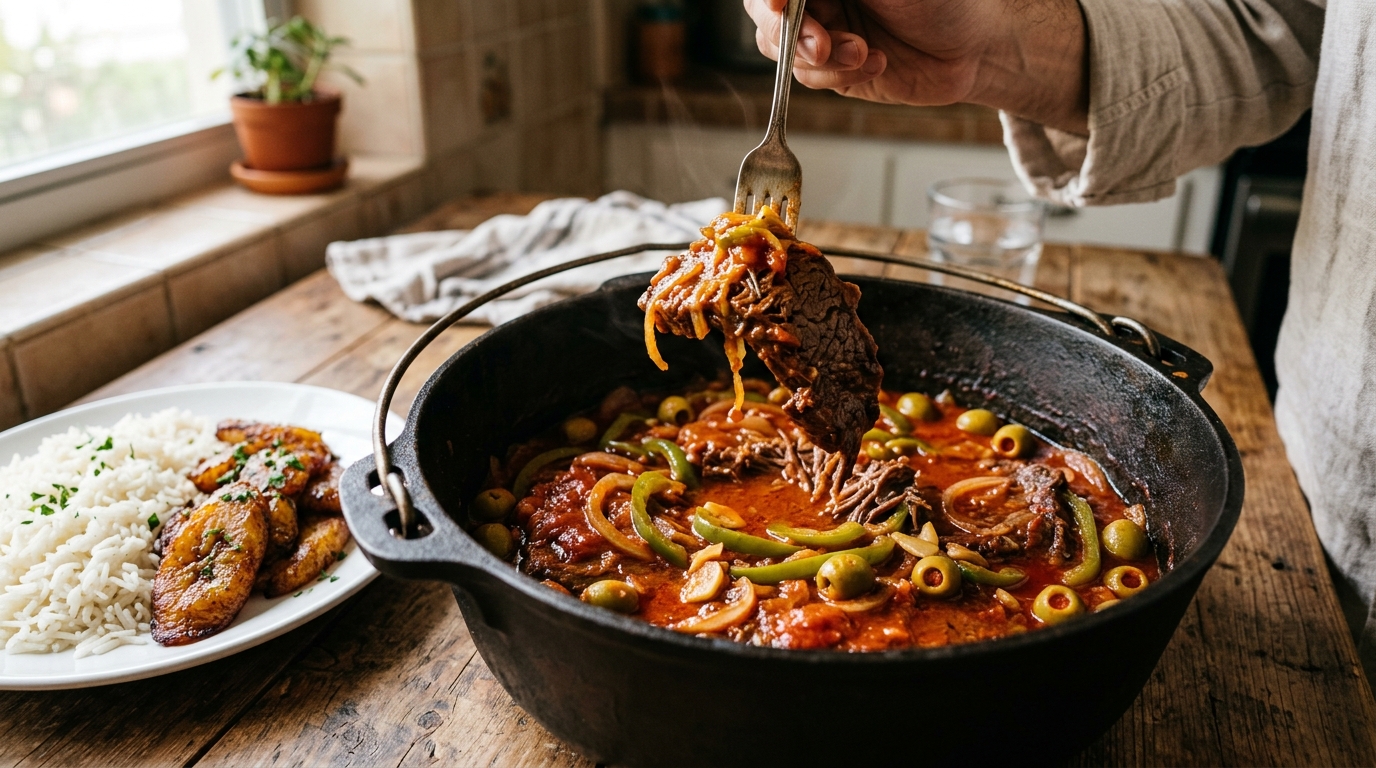
Under anything with gravy: bistec encebollado is the classic partner, then carne guisada, pollo guisado, chuletas fritas, or a braise like Cuban bistec en cazuela. At Thanksgiving they go next to pavochón and arroz con gandules. A well of melted butter in the middle and chopped scallions on top is how they come at a fonda.
Frequently asked questions
What makes Puerto Rican mashed potatoes different?
Garlic boiled with the potatoes, evaporated milk instead of cream, and often a spoon of cream cheese or mayonnaise for richness. They're smoother and more garlicky than typical American mashed potatoes.
What does papa majada mean?
Mashed potato — majar means to mash or pound in Spanish, the same root as in mofongo.
What potatoes are best for papa majada?
Russets (Idaho) for the fluffiest, smoothest mash; Yukon Golds for a denser, buttery version. Avoid red or waxy potatoes — they turn gummy.
Why are my mashed potatoes gluey?
They were overworked — a blender, food processor or electric mixer beats the starch into paste. Use a ricer or a hand masher, and mash while hot.
Can I make papa majada ahead?
Yes — keep warm up to 2 hours in a covered bowl over simmering water, or refrigerate up to 3 days and reheat gently with a splash of milk. Leftovers make excellent rellenos de papa.
Can I freeze mashed potatoes?
These freeze better than most because of the cream cheese and butter — 2 months, thawed overnight and reheated slowly with milk.
One last thing
Side dishes rarely get a recipe this long, but this is the one people actually ask me for after dinner. Leave a rating below if you make them and tell me what you served them under.
0 comments